


Pilling in fleece products – interview with ENGEL quality manager Katja
Katja is our quality manager and knows every fibre personally. Her area of expertise: natural wool and its processing.
As an experienced quality manager, she checks every day whether each garment meets the high standards of quality, freedom of harmful substances and colour fastness.
With her passion for ecological textiles, her in-depth expertise and her keen eye for detail, she embodies what ENGEL stands for: honest quality – from the fibre to the seam.

Katja:
"These bobbles are called pilling. They occur when short wool fibres become detached from the knitwear through friction during wear or washing and become knotted. This happens especially where fabric rubs against fabric – for example, on the sleeves or sides. Pilling is therefore a natural process and not a quality defect."
"These bobbles are called pilling. They occur when short wool fibres become detached from the knitwear through friction during wear or washing and become knotted. This happens especially where fabric rubs against fabric – for example, on the sleeves or sides. Pilling is therefore a natural process and not a quality defect."
Katja:
"Basically, wool fleece is more prone to pilling – this is due to the special structure of the material. The raw material fleece is deliberately roughened during production, creating many fine fibres on the surface. These loose fibres can knot together more easily due to friction, leading to the formation of bobbles. Our wool fleece products are made from 100% organic virgin wool and are untreated. This means that we deliberately avoid using chemical anti-pilling treatments that contain synthetic resins or silicones.
These agents could alter the behaviour of the fibres and would be ecologically questionable. That's why pilling is a sign of authenticity in our natural clothing – not a sign of poor quality."
"Basically, wool fleece is more prone to pilling – this is due to the special structure of the material. The raw material fleece is deliberately roughened during production, creating many fine fibres on the surface. These loose fibres can knot together more easily due to friction, leading to the formation of bobbles. Our wool fleece products are made from 100% organic virgin wool and are untreated. This means that we deliberately avoid using chemical anti-pilling treatments that contain synthetic resins or silicones.
These agents could alter the behaviour of the fibres and would be ecologically questionable. That's why pilling is a sign of authenticity in our natural clothing – not a sign of poor quality."
Can pilling be prevented in fleece?
Katja:
"Not completely – but you can significantly reduce the tendency to pill.
The most important thing is proper care:
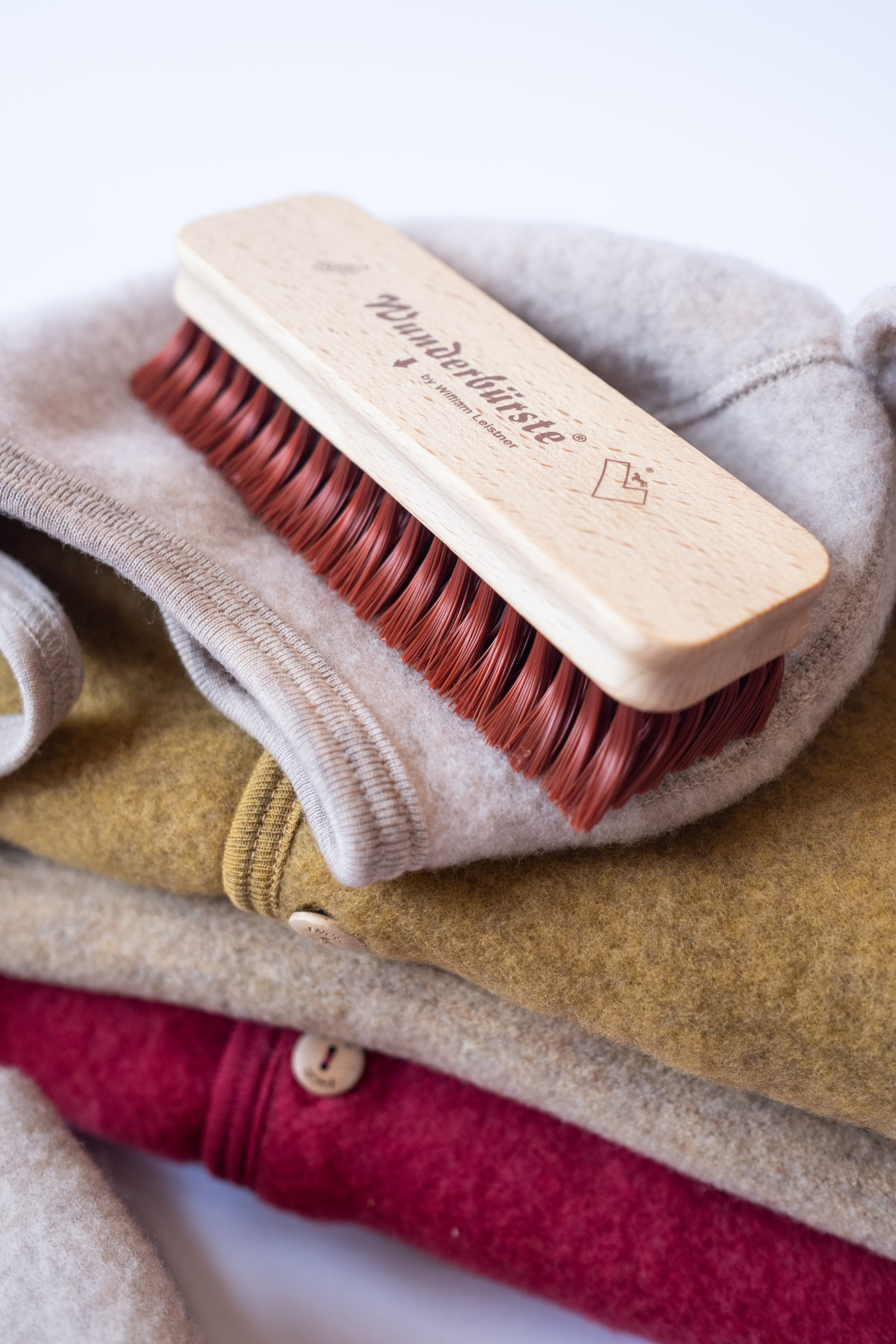
- Brush clothing regularly (e.g. with soft natural hair brush).
- Avoid friction, e.g. consciously refrain from wearing backpacks frequently.
- Do not use fabric softener – it destroys the protective wool grease layer and promotes pilling."
Katja:
"Yes, it works if you're careful. I recommend using a lint shaver or a special pilling device. A normal razor will also work, but only on flat fabric and without applying pressure. Alternatively, a lint roller or adhesive tape can help to remove loose bobbles."
"Yes, it works if you're careful. I recommend using a lint shaver or a special pilling device. A normal razor will also work, but only on flat fabric and without applying pressure. Alternatively, a lint roller or adhesive tape can help to remove loose bobbles."
Katja:
Katja: "Pilling is not a typical characteristic of wool – polyester fabrics can also pill. Whether a material is prone to pilling depends primarily on the type of yarn and the manufacturing process. For example, voluminous yarns pill more quickly than smooth, compactly spun yarns. The processing of the fabric – whether knitted, woven or roughened – also influences pilling behaviour. Pilling is not a reason for complaint. Our wool fleece items are not chemically treated because we value sustainability over perfection. This allows each fibre to retain its breathable and temperature-regulating properties – that is the true proof of quality.
And anyone who removes the bobbles will quickly notice that the material remains soft, warm and durable."
Katja: "Pilling is not a typical characteristic of wool – polyester fabrics can also pill. Whether a material is prone to pilling depends primarily on the type of yarn and the manufacturing process. For example, voluminous yarns pill more quickly than smooth, compactly spun yarns. The processing of the fabric – whether knitted, woven or roughened – also influences pilling behaviour. Pilling is not a reason for complaint. Our wool fleece items are not chemically treated because we value sustainability over perfection. This allows each fibre to retain its breathable and temperature-regulating properties – that is the true proof of quality.
And anyone who removes the bobbles will quickly notice that the material remains soft, warm and durable."
Katja:
"Always wash woollen fleece on the wool cycle at a maximum of 30°C with a wool detergent.
If pilling does occur, simply remove it gently. This is part of the natural look of wool, which develops with frequent wear." Our conclusion: Pilling is not a sign of poor quality, but proof of natural wool. With the right care and knowledge of the material properties, you can wear your favourite pieces for a long time – authentic, sustainable and beautiful."
"Always wash woollen fleece on the wool cycle at a maximum of 30°C with a wool detergent.
- Do not use fabric softener.
- Do not wash your woollen clothing too often; it is better to air it regularly.
- If necessary, wash it in a laundry bag to avoid friction.
- After washing, gently pull the garment into shape and lay it flat to dry – this will preserve its structure.
If pilling does occur, simply remove it gently. This is part of the natural look of wool, which develops with frequent wear." Our conclusion: Pilling is not a sign of poor quality, but proof of natural wool. With the right care and knowledge of the material properties, you can wear your favourite pieces for a long time – authentic, sustainable and beautiful."
Katja:
"Definitely the women's wool fleece short jacket in sand melange. I wear it almost every day in the transitional season – it's light, warm, breathable and yet robust. What I particularly like is that the material changes a little over time, becoming softer – like a garment with character.
And yes, my jacket does pill a little, but that doesn't bother me. On the contrary: it reminds me that I'm wearing genuine, untreated natural fibres against my skin."
"Definitely the women's wool fleece short jacket in sand melange. I wear it almost every day in the transitional season – it's light, warm, breathable and yet robust. What I particularly like is that the material changes a little over time, becoming softer – like a garment with character.
And yes, my jacket does pill a little, but that doesn't bother me. On the contrary: it reminds me that I'm wearing genuine, untreated natural fibres against my skin."
You may also be interested in:


