
Boiled wool or wool fleece? Quality manager Katja provides clarity
Katja is a quality manager at ENGEL and knows every fibre personally. Her area of expertise: natural wool and its processing.
As an experienced quality manager, she checks every day whether each garment meets the high standards of quality, freedom of harmful substances and colour fastness.With her passion for ecological textiles, her in-depth expertise and her keen eye for detail, she embodies what ENGEL stands for: honest quality – from the fibre to the seam.

Katja:
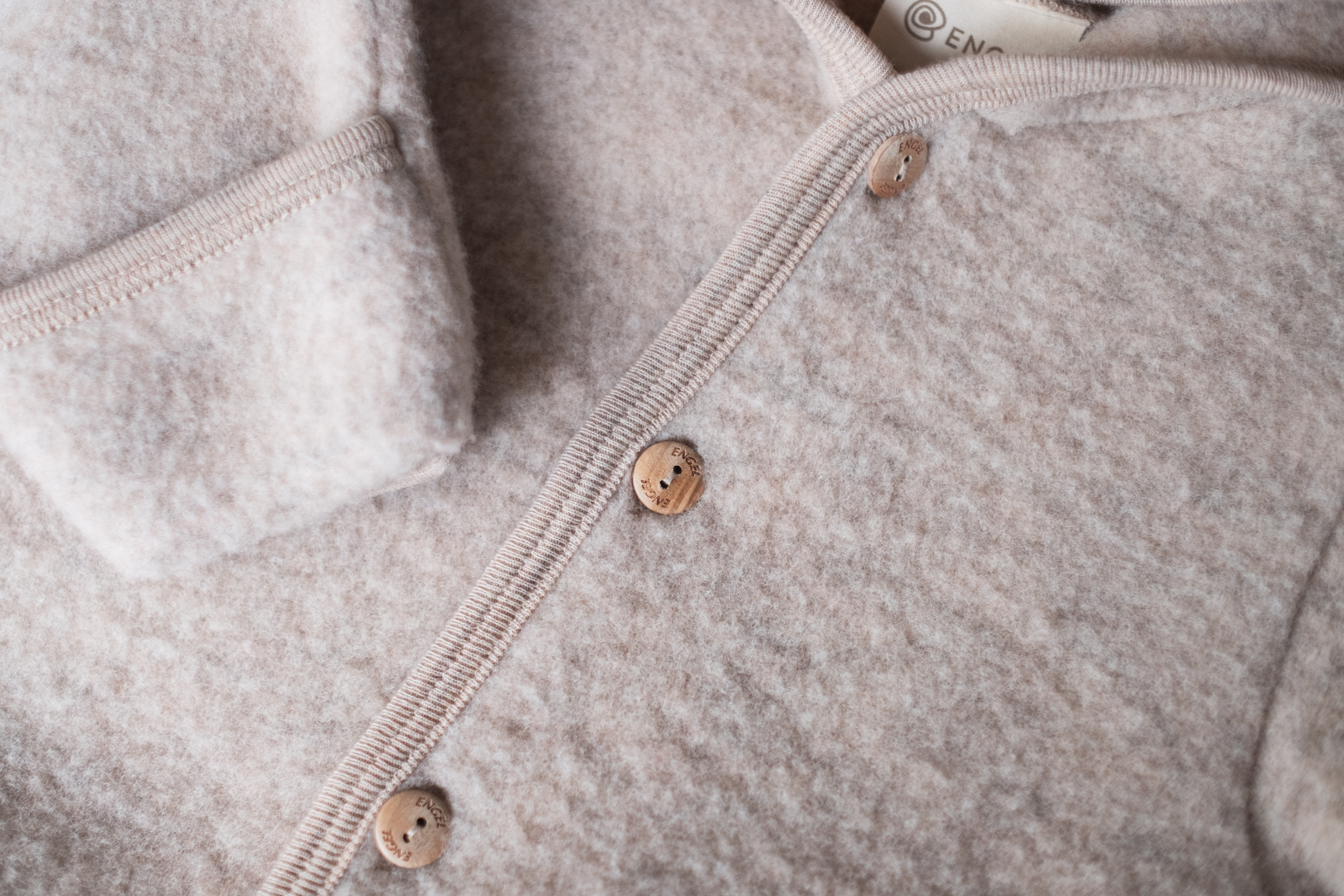
"After knitting, the material is first washed. The surface is then roughened on both sides to achieve that wonderfully soft, fluffy effect that many people love.
The fleece is then shaved to a uniform fibre height and loose fibres are vacuumed off – although a few fluff particles sometimes remain. This is normal and disappears over time.
At ENGEL, we have two variants:
"After knitting, the material is first washed. The surface is then roughened on both sides to achieve that wonderfully soft, fluffy effect that many people love.
The fleece is then shaved to a uniform fibre height and loose fibres are vacuumed off – although a few fluff particles sometimes remain. This is normal and disappears over time.
At ENGEL, we have two variants:
How is boiled wool made?
Katja:
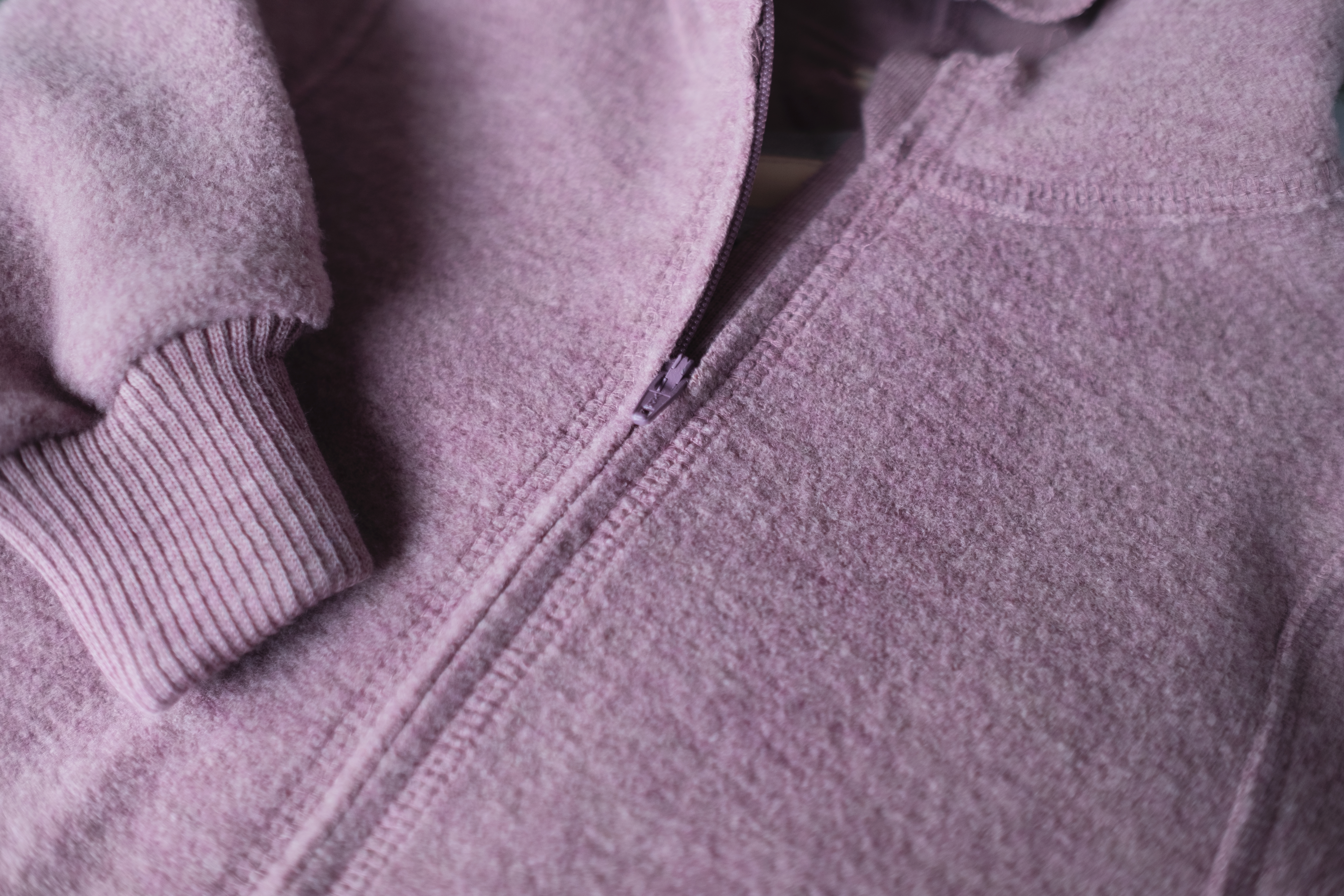
"Wool walk is also made from terry cloth. However, it undergoes an additional fulling process. The fabric is washed for three hours in water heated to almost 100°C. The scale structure of the wool fibres swells and the fibres become interlocked, creating a compact, robust fabric with many small air pockets that are excellent at retaining heat.
Our knitted fulled fabric has a specific weight of around 440 g/m², but is still more stretchy than woven fulled fabric – perfect for active children comfortable clothing for women and men.“
"Wool walk is also made from terry cloth. However, it undergoes an additional fulling process. The fabric is washed for three hours in water heated to almost 100°C. The scale structure of the wool fibres swells and the fibres become interlocked, creating a compact, robust fabric with many small air pockets that are excellent at retaining heat.
Our knitted fulled fabric has a specific weight of around 440 g/m², but is still more stretchy than woven fulled fabric – perfect for active children comfortable clothing for women and men.“
Question:
A common question from the community is: Which is actually warmer – boiled wool or wool fleece?
Katja:
"Both fabrics have their strong points.
Boiled wool is more robust and wind and water-repellent, as the boiling process makes it denser and more insulating – it keeps out the wind better and retains body heat longer.
Wool fleece, on the other hand, is particularly soft, light and cuddly. Its roughened surface has many small air pockets that are warm and breathable at the same time."
A common question from the community is: Which is actually warmer – boiled wool or wool fleece?
Katja:
"Both fabrics have their strong points.
Boiled wool is more robust and wind and water-repellent, as the boiling process makes it denser and more insulating – it keeps out the wind better and retains body heat longer.
Wool fleece, on the other hand, is particularly soft, light and cuddly. Its roughened surface has many small air pockets that are warm and breathable at the same time."
Katja:
"We get this question a lot from customers. Wool fleece is suitable for temperatures between +5 and +18°C, depending on how sensitive you are to the clothing worn underneath. In cold temperatures, it can be worn as a mid-layer under a weatherproof outer layer such as a boiled wool jacket. Wool fleece is ideal for babies and children during the transition period – in the buggy or when crawling. The exact temperature is individual, so it is important to pay attention to your child.
On particularly cold, windy days, I recommend wearing boiled wool as an outer layer as well. But even when it is very cold, with temperatures below freezing, wool fleece is suitable for outdoor use, provided the child has enough layers (3-4) of wool clothing underneath."
"We get this question a lot from customers. Wool fleece is suitable for temperatures between +5 and +18°C, depending on how sensitive you are to the clothing worn underneath. In cold temperatures, it can be worn as a mid-layer under a weatherproof outer layer such as a boiled wool jacket. Wool fleece is ideal for babies and children during the transition period – in the buggy or when crawling. The exact temperature is individual, so it is important to pay attention to your child.
On particularly cold, windy days, I recommend wearing boiled wool as an outer layer as well. But even when it is very cold, with temperatures below freezing, wool fleece is suitable for outdoor use, provided the child has enough layers (3-4) of wool clothing underneath."
Katja:
"As a general rule, both materials should be washed as infrequently as possible, but aired regularly.
If necessary, wash them on the wool cycle at a maximum of 30 °C and 400 rpm with a special wool detergent.
Important: Do not use fabric softener, as it damages the wool structure.
Wool fleece can be more prone to pilling due to the manufacturing process – the roughening during finishing, which ensures that the fabric is so voluminous and fluffy.
Wool walk, on the other hand, is more robust and abrasion-resistant.“
"As a general rule, both materials should be washed as infrequently as possible, but aired regularly.
If necessary, wash them on the wool cycle at a maximum of 30 °C and 400 rpm with a special wool detergent.
Important: Do not use fabric softener, as it damages the wool structure.
Wool fleece can be more prone to pilling due to the manufacturing process – the roughening during finishing, which ensures that the fabric is so voluminous and fluffy.
Wool walk, on the other hand, is more robust and abrasion-resistant.“
Katja (laughs):
„For me personally? I prefer wool walk. I love the compact, warm feel, especially when going for walks or in the garden.
I also really like wearing wool fleece – especially at home or when I want to move freely and easily. It depends on the situation – and that's the beauty of it: both fabrics complement each other perfectly.“
„For me personally? I prefer wool walk. I love the compact, warm feel, especially when going for walks or in the garden.
I also really like wearing wool fleece – especially at home or when I want to move freely and easily. It depends on the situation – and that's the beauty of it: both fabrics complement each other perfectly.“


